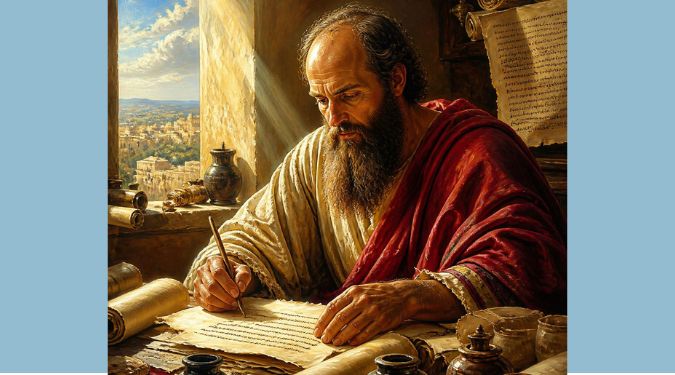
If with Christ you died to the elemental spirits of the universe, why do you live as if you still belonged to the world? Colossians 2:20a
The notion of dying to the powers of evil (“elemental spirits of the universe”) with Christ reminds me of the words of theologian Walter Wink:
One does not become free from the Powers by defeating them in a frontal attack. Rather, one dies to their control: “Those who try to make their life secure will lose it, but those who lose their life will keep it” (Luke 17:33). Here also the cross is the model: we are liberated, not by striking back at what enslaves us—for even striking back reveals that we are still controlled by violence—but by a willingness to die rather than submit to its command. (Wink 93)
A willingness to die rather than submit to the command of the powers of evil – dying to their control. How might this work, I wonder, with respect to the Atonement?
Perhaps a refusal to submit to the powers of evil, even to the point of dying, is synonymous with true obedience to God, the All Good. And while many holy men and women have refused to be under the command of evil, even leading to their deaths, none did so perfectly until, Our Lord, who was true God and true man, perfectly refused to be subject to the Powers as a man, suffering death on the cross. This was the first time a man perfectly repudiated evil since the Fall. Moreover, Our Lord, who “though he was in the form of God,did not count equality with God a thing to be grasped” (Philippians 2:6), also repudiated the self-deification that is central to the diabolic powers and to the sin of Adam.
That this act was perfect obedience by a man can be seen in St. Paul’s letter to the Romans:
For as by one man’s disobedience many were made sinners, so by one man’s obedience many will be made righteous. Romans 5:19
When discussing this verse, St. Irenaeus of Lyons (~198 AD) described salvation as a reversal of the history of Adam. For every act of disobedience committed by the first man, Our Lord (the “Second Adam”) performed an act of obedience. Adam’s disobedience occurred at a tree (the Tree of Knowledge), while Our Lord’s obedience occurred on a tree, the Cross. Eve’s disobedience led to death, while the “New Eve’s (the Virgin Mary) “fiat” led to life. (Irenaeus 3.21.10, Howell)
For me, the idea of “dying to the Powers” provides one of several ways to understand the awesome Atonement wrought by Our Lord. Our Lord’s dying to the Powers was a true sacrifice and was very violent, but what was required was not some threshold of violence, but rather a perfect refusal on the part of a man to be subject to the powers of evil – perfect obedience.
Works Cited
Howell, Kenneth. “How Can You Say That Mary Is the ‘New Eve’?” Catholic Answers, https://www.catholic.com/magazine/print-edition/how-can-you-say-that-mary-is-the-new-eve. Accessed 6 January 2026.
Irenaeus. Against Heresies. Translated by Alexander Roberts and James Donaldson, Book 3, Chapter 21, New Advent, edited by Kevin Knight, www.newadvent.org/fathers/0103321.htm. Accessed 11 Jan. 2026.
Wink, Walter. The Powers That Be: Theology for a New Millennium. Harmony/Rodale/Convergent, 1999.