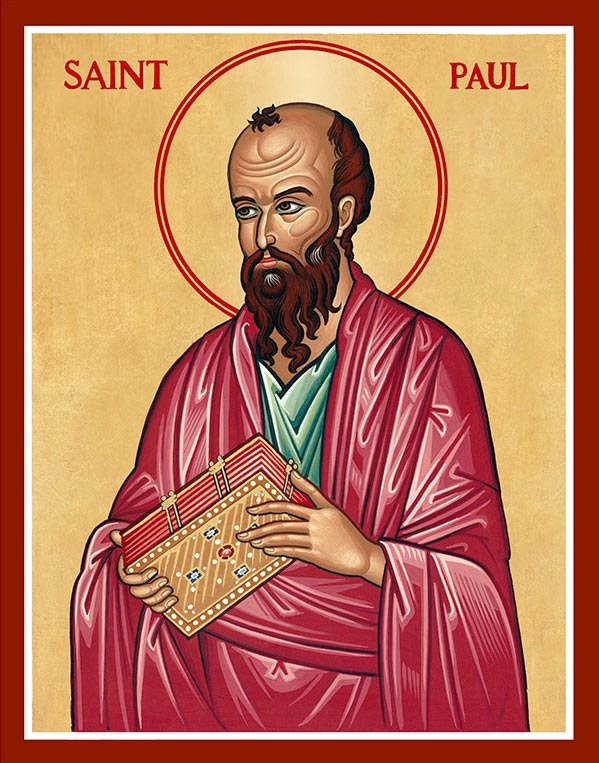

While exact dates remain a subject of debate among scholars, the sources that I’ve gathered generally agree on the trajectory of Paul’s life, often using the Proconsulship of Gallio in Corinth (AD 51 – 52) as the primary historical anchor to date other events.
Early Life and Conversion (c. AD 5 – 36)
Birth and Heritage: Paul (born “Saul”) was born between AD 5 and AD 9 in Tarsus of Cilicia. He was a Roman citizen and a Jew from the tribe of Benjamin. He was educated in Jerusalem under the teacher Gamaliel, and became a zealous Pharisee. Paul seems to have adhered to the Shammai school, while Gamaliel was of the Hillel school. (Wright)
Persecutor of the Church: In his early years, Paul viewed Christianity as a threat to Judaism. He was present at the stoning of Stephen (c. AD 32 – 34) and aggressively persecuted believers, imprisoning them and pursuing them to foreign cities.
The Damascus Road (c. AD 33 – 36): Paul experienced a dramatic conversion (or “revelation”) while traveling to Damascus to arrest Christians. He saw a blinding light and heard the voice of Jesus commissioning him to preach to the Gentiles. (Gal 1:12-17; Acts 9)
The “Silent Years” and Early Ministry (c. AD 36 – 46)
Following his conversion, there is a period often described as the “silent years,” though it seems clear that these were years of active but unrecorded ministry.
Arabia and Return: Paul spent roughly three years in Arabia immediately after his conversion, eventually returning to Damascus where he escaped a plot against his life by being lowered down a wall in a basket. (Gal 1:17; Acts 9:23-24; perhaps 2 Corinthians 12:1-4) (Noel) Arabia was probably the territory of the Nabatean Kingdom from Damascus south to the Red Sea. Perhaps Paul visited the traditional site of Mt. Sinai (Horeb) (see Gal 4:25). (Hahn and Mitch 332). St. Jerome, commenting on Galatians 1:17 said:
How are we to explain this narrative, if we read later that Paul went immediately to Arabia after the revelation of Christ? … He teaches that the Old Testament, that is, the son of the bondwoman, was established in Arabia. And so, as soon as Paul believed, he turned to the Law, the Prophets and the symbols of the Old Testament that were then lying in obscurity and sought in them the Christ whom he was commanded to preach to the Gentiles. .
First Jerusalem Visit: Paul briefly visited Jerusalem (c. AD 36 – 39) to meet Peter and James but stayed only 15 days. (Gal 1:18-20; Acts 9:26-30; 11:30)
The “Silent Years” in Syria and Cilicia: To escape danger in Jerusalem, he was sent home to Tarsus. He spent the next decade (approx. AD 36 – 45) in the regions of Syria and Cilicia (Gal 1:21). While Wright opines that “Saul…spent the silent years in Tarsus laboring, studying, and praying…” Osborne suggests that the specific sufferings Paul lists in 2 Corinthians 11:24-27 (shipwrecks and beatings not recorded in Acts) likely occurred during this “silent” period, implying he was actively establishing churches and enduring persecution before his famous missionary journeys began. Osborne dates Paul’s escape from Damascus (referenced in 2 Corinthians 11:32 and Acts 9:25) based on when King Aretas gained control of the city. He notes that Aretas’s control began circa AD 37, determined by the evidence of coins and inscriptions, serving as the starting point for the silent period. To date the end of the silent period, Osborne looks to the death of Herod Agrippa, described in Acts 12:23. Most scholars date this event to about AD 44.
Paul arrives in Antioch (AD 45): Osborne uses the famine foretold by Agabus (Acts 11:28) to date Paul’s reappearance in Antioch. Since scholars date this famine to approximately AD 45 – 46, Osborne concludes Paul arrived in Antioch with Barnabas around AD 45. Paul and Cephas (Peter) argue in Antioch. (Gal 2:11-14; Acts 11:19-26 (Cephas is not mentioned in the latter)). Wright says that this occurred in AD 48.
The Major Missionary Journeys (c. AD 47 – 57)
First Missionary Journey (c. AD 47 – 48) (Acts 13-14): Commissioned by the church in Antioch, Paul traveled with Barnabas and John Mark to Cyprus and the province of Galatia (cities including Pisidian Antioch, Iconium, Lystra, and Derbe). They established churches and appointed elders before returning to Antioch.
The Apostolic Council (c. AD 49) (Acts 15:1-29): Paul then attended the Council of Jerusalem to argue against those claiming Gentile converts must be circumcised. The council agreed with Paul that Gentiles did not need to follow Jewish law. (Gal 2:1-10; Acts 15:23-29)
Second Missionary Journey (c. AD 49 – 52) (Acts 15:36 – 18:22): Paul’s second missionary journey began in Jerusalem where they proceeded to Antioch after visiting Caesarea and Tyre. Paul separated from Barnabas over a dispute regarding John Mark and traveled instead with Silas (and later Timothy). They traveled through Asia Minor to Macedonia (planting churches in Philippi and Thessalonica) and Achaia (Athens and Corinth). Paul stayed in Corinth for 18 months. During this stay, he was brought before the proconsul Gallio (AD 51 – 52) and wrote 1 and 2 Thessalonians. After his stay in Corinth, Paul visited Ephesus, Cyprus, and then Cesarea before returning to Jerusalem. Paul’s preaching in Ephesus caused a riot which some say was the “affliction” that Paul mentions in 2 Corinthians 1:8-9. (Hahn and Mitch 313)
Third Missionary Journey (c. AD 52 – 57) (Acts 18:23-21:17): Paul’s third missionary journey began in Antioch and proceeded through Galatia. Paul made Ephesus his headquarters for roughly three years, using it as a base to spread the gospel throughout Asia Minor. During this period, he wrote major epistles, including 1 and 2 Corinthians and Romans (written later from Corinth). He also focused on organizing a collection of money for the poor believers in Jerusalem.
Arrest and Imprisonment (c. AD 57 – 62)
Jerusalem Arrest (AD 57): Upon delivering the collection to Jerusalem, Paul was beaten by a mob in the Temple and arrested by Roman troops.
Caesarea (AD 57 – 59): He was imprisoned for two years under governors Felix and Festus. To avoid a trial in Jerusalem, he appealed to Caesar based upon his Roman citizenship.
Voyage to Rome: En route to Rome, Paul was shipwrecked on the island of Malta but eventually arrived safely in Rome.
First Roman Imprisonment (c. AD 60 – 62): Paul spent two years under house arrest in Rome, preaching without hindrance. During this confinement, he wrote the “Prison Epistles”: Ephesians, Philippians, Colossians, and Philemon.
Final Years and Martyrdom (c. AD 62 – 68)
Because the Book of Acts ends with Paul’s house arrest, the chronology of his final years is reconstructed from his letters and early church tradition.
Release and Travel: Scholars believe Paul was released around AD 62. He likely traveled to Crete, Ephesus, Macedonia, and possibly Spain.
The Pastoral Epistles: During this period of freedom, he likely wrote 1 Timothy and Titus.
Second Arrest and Death: Paul was imprisoned in Rome a second time, during which he wrote his final letter, 2 Timothy. He was martyred (likely beheaded as a Roman citizen) under Emperor Nero. The date of his death is estimated between AD 64 and 68. There are also some other scholars who believe that Paul was never released from his first imprisonment in Rome and was executed after the Great Fire of Rome in AD 64.
Works Cited
“Apostle Paul’s Timeline – Study Resources.” Blue Letter Bible, https://www.blueletterbible.org/study/paul/timeline.cfm. Accessed 31 January 2026.
Berding, Kenneth. “Chronology of the Apostle Paul – Kindle Afresh.” Kindle Afresh, 21 August 2021, https://kennethberding.com/2021/08/21/chronology-of-the-apostle-paul/#_ftn4. Accessed 31 January 2026.
Hahn, Scott, and Curtis Mitch. The New Testament. Edited by Scott Hahn and Curtis Mitch, Ignatius Press, 2010.
Just, Felix. “Chronology of Paul’s Life and Missionary Journeys.” Catholic-Resources.org, 2 Jan. 2024, https://catholic-resources.org/Bible/Pauline_Chronology.htm.
“Map.” In the Footsteps of Saint Paul, inthefootstepsofstpaulmcp.weebly.com/map.html. Accessed 8 Feb. 2025.
Meyer, Janet. “Christian History Timeline: The Apostle Paul and His Times | Christian History Magazine.” Christian History Institute, https://christianhistoryinstitute.org/magazine/article/apostle-paul-timeline. Accessed 31 January 2026.
Moss, Jr., Robert V. “The Life of Paul.” The Cooperative Series Leadership Training Textbooks, Philadelphia, The Christian Education Press, 1956.
Noel, Eliza. “Timeline of Paul’s Life and Missionary Journeys.” Ethnos360 Bible Institute, 4 November 2024, https://e360bible.org/blog/timeline-of-pauls-life-and-missionary-journeys/. Accessed 31 January 2026.
Osborne, Robert E. “St. Paul’s Silent Years.” Journal of Biblical Literature, vol. 84, no. 1, 1965, pp. 59 – 65.
“School of Shammai.” Fiveable, 2024, fiveable.me/key-terms/introduction-to-judaism/school-of-shammai. Accessed 8 Feb. 2024.
St. Jerome. “Galatians 1:17.” Catena Bible & Commentaries, AD30, Inc., catenabible.com/com/584233c025973d7a18c66700. Accessed 5 Feb. 2025.
Wright, N. T. Paul: A Biography. HarperCollins, 2018.
Wright, N. T. “Paul, Arabia, and Elijah (Galatians 1:17).” Journal of Biblical Literature, vol. 115, no. 4, 1996, pp. 683 – 92. JSTOR, https://doi.org/10.2307/3266349. Accessed 2 Feb. 2026.